

Environmental Impact Statement

The Environmental Impact Statement is an important step in our process and underscores EVREC’s commitment to responsible development and to working alongside communities and stakeholders to ensure that the environmental impact is carefully considered at every stage of this transformative project. Access EVREC’s Environmental page here: Botwood and Area EVREC Green Energy Project – Environment and Climate Change (gov.nl.ca)
Minimizing Our Impact
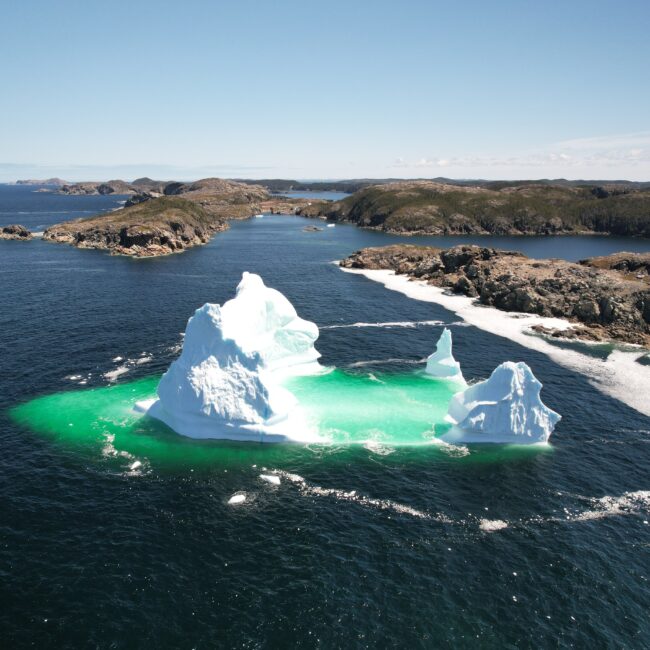
Through Environmental Assessments Before formal construction begins, we conduct detailed environmental impact assessments. These studies evaluate local ecosystems, wildlife habitats, water resources, and land use to ensure the project is designed with minimal disruption to the surrounding environment.
Powering Progress while Respecting Nature
At EVREC, we are committed to building a clean, sustainable P2X project while protecting the environment. Our approach to wind and solar energy development is guided by science, regulatory compliance, and a deep respect for the natural world.

Wildlife Protection
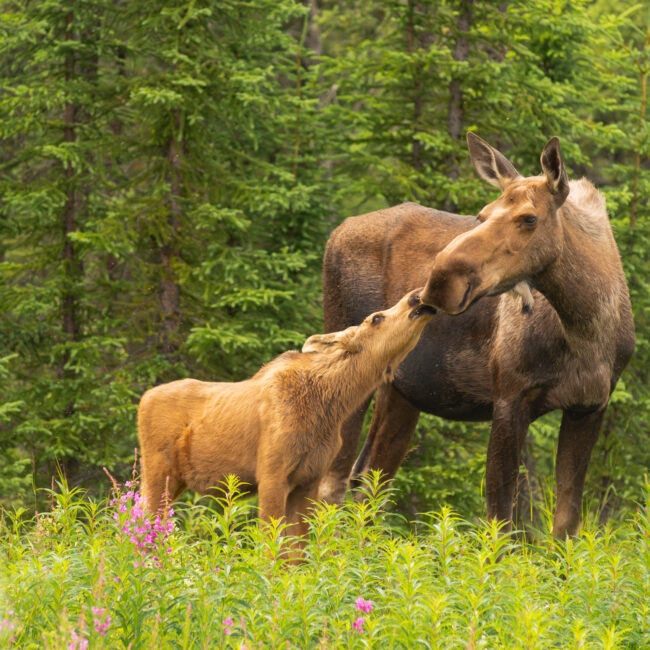
We work closely with biologists and conservation organizations to safeguard local wildlife. Our strategies include careful turbine siting, technological solutions, and ongoing monitoring to adapt as needed.
Carbon-Free Energy
By producing zero-emission electricity, EVREC’s project will significantly reduce greenhouse gas emissions compared to fossil fuel generation. Over its lifetime, this project will offset millions of tons of carbon dioxide, helping combat climate change at scale.


Environmental Management Systems (EMS)
We are committed to operational excellence through the implementation of robust Environmental Management Systems (EMS). Our approach aligns with international standards such as ISO 14001 and the Equator Principles. This ensures that every stage of our projects complies with regulations and minimizes environmental impact. We actively promote a culture of environmental responsibility to build a resilient and sustainable value chain.
Land Stewardship
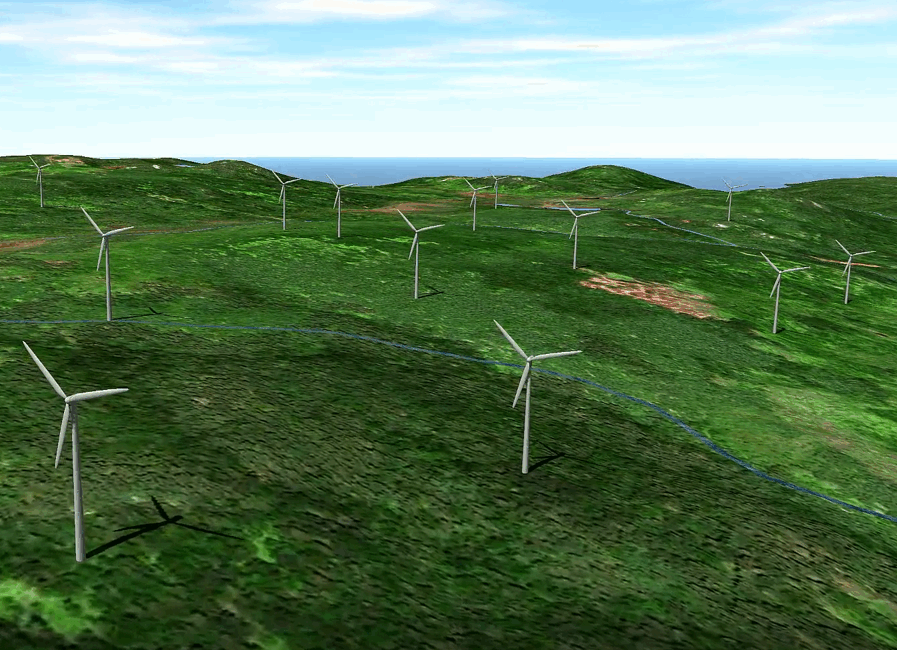
The project will be constructed on a brownfield industrial site – a former logging site. Wind energy offers a low-impact footprint. Turbines are spaced to allow agricultural activity and natural ecosystems to continue around them. We also implement erosion control measures and habitat restoration where necessary.
Environmental Faq
How has EVREC consulted the community and Indigenous groups?
EVREC has run an extensive public and Indigenous engagement program since 2023. It includes open houses and meetings with municipalities, Indigenous groups, regulators, industry, land users and the public. Feedback has directly shaped project planning, routing, environmental studies and mitigation, and consultation continues through permitting, construction and operations.
How does the project handle overlapping land uses?
EVREC has designed the project to minimize conflicts with existing forestry, mineral, recreational and Crown-land uses. Existing rights are managed through established provincial processes, discussions with rights holders and government continue, and detailed siting will keep avoiding or reducing impacts wherever feasible.
What happens to the Botwood walking trail?
The haul road and related infrastructure are designed to keep people safe and minimize disruption to existing trails. Where a crossing can’t be avoided, EVREC will provide safe crossings, signage or alternate routing, developed with the Town and trail users.
Is the project feasible and financially viable?
EVREC is advancing through the structured development stages typical of a project this size. These include technical development, commercial negotiations, environmental assessment, permitting, offtake and financing. As with any project of this scale, a final investment decision will only follow regulatory approvals, commercial agreements and secured financing.
How is public safety and community risk managed?
Public safety is a primary design consideration throughout EVREC. The project will meet all applicable Canadian codes, provincial regulations and international engineering standards. Detailed hazard studies (HAZID, HAZOP, quantitative risk assessment), emergency-response planning and fire-protection and safety systems will be completed before construction, keeping public risk within accepted regulatory limits
What are the visual impacts (viewscapes)?
EVREC has considered topography, vegetation, setbacks and layout to reduce visual effects where practical. It will provide visual simulations from representative community viewpoints during detailed design to show how the project will actually look.
What setbacks apply to homes, roads and cabins?
Wind turbines and facilities are sited to meet or exceed provincial guidelines and industry practice, with residential setbacks generally exceeding 550 metres. Infrastructure is located to keep safe distances from public roads and occupied buildings, and final siting continues to be refined during detailed engineering.
Are there risks from blade failure or ice throw?
Modern turbines are certified to international standards with multiple redundant safety systems, so catastrophic blade failure is extremely unlikely. For ice throw, turbines carry ice-detection and automatic-shutdown systems and are set back from occupied areas, with access restricted where needed during construction and maintenance. Continuous monitoring, lightning protection and operational controls further protect the public.
What are the watershed impacts?
Surface water, groundwater, fisheries, wetlands and watershed conditions have all been assessed in the environmental studies. Watercourse crossings and operations will follow provincial and federal requirements, using erosion and sediment control, monitoring and adaptive management to minimize effects on water.
What water-supply data supports the project?
EVREC has completed detailed hydrological studies of available water supply, seasonal variability and long-term sustainability. Withdrawals are designed to stay within acceptable environmental limits while protecting aquatic ecosystems, with monitoring continuing through operations to confirm compliance.
Will there be flaring at the plant or port?
Routine flaring is not expected during normal operations. Any flaring systems are for emergency pressure relief, commissioning, maintenance or upset conditions, designed to meet recognized international safety standards and to minimize flaring while keeping operations safe.
How is water discharge managed?
Process-water and stormwater discharges will meet all applicable provincial and federal requirements. Treatment systems are designed to meet permit conditions before discharge, with water-quality monitoring and reporting throughout construction, operations and reclamation.
How is waste managed?
EVREC manages construction and operational waste under provincial regulations, with minimization, recycling, reuse and licensed disposal built into its Environmental Management Plan. Hazardous wastes are handled separately under applicable law.
What community benefits will the project bring?
EVREC expects to deliver significant local benefits — employment, procurement, municipal tax revenue, infrastructure investment, training and long-term economic activity. It will negotiate community-benefit arrangements with its host town – the Town of Botwood and continues discussions with Indigenous organizations and surrounding communities on participation.
How are accidents and malfunctions assessed?
The EIS assesses credible accident and malfunction scenarios — transport incidents, equipment failures, spills, fires and natural hazards. Facilities are designed to Canadian and international standards with layered prevention, detection, containment and emergency response to reduce both the likelihood and the consequences of such events.
How will the project affect Moose Management Area 15?
EVREC has assessed potential effects on wildlife habitat and movement in Moose Management Area 15 and will keep working to minimize them. It continues to work with provincial wildlife agencies, outfitters, Indigenous organizations and stakeholders on siting, construction scheduling, traffic management and habitat mitigation.
What are the impacts on the electrical grid?
EVREC is designed to be 100 percent off-grid, powered entirely by its own renewable generation. It has completed detailed electrical-system studies and applied for a grid connection for emergency and backup support, complying with Newfoundland and Labrador Hydro’s interconnection requirements so the provincial system stays safe and reliable.
How will the project affect tourism?
EVREC is not expected to materially affect the region’s tourism sector. While the project adds new visual elements in places, recreational opportunities and access are expected to remain available, and EVREC will keep engaging tourism operators, municipalities and recreational users to avoid or minimize impacts.
How much noise will the project make?
EVREC models all noise — construction, operational, traffic and low-frequency — against Health Canada’s 45 dBA guideline. Setbacks from homes and cabins are the main control, supported by restricted working hours, equipment noise controls and advance notice, with a dedicated haul road keeping most traffic off public roads. Modelling is updated as the final layout is confirmed, and post-construction monitoring and a complaint process continue through operations. Current Health Canada research does not establish a direct physiological health effect from infrasound at these levels, though annoyance and sleep disturbance are managed through the 45 dBA guideline.
How are shadow flicker and turbine lighting handled?
Shadow flicker is modelled year-round against the recognized limits of 30 hours per year and 30 minutes on the worst day. Where a home or cabin could exceed those limits, turbine-specific curtailment is applied, and modelling is updated as the final layout is confirmed. Aviation lighting is required by Transport Canada; EVREC will use the lowest permitted light intensity and the fewest fixtures.
What about ammonia odour and air emissions?
The ammonia facility is a closed system with ammonia contained in process equipment and refrigerated storage, so routine releases are not intended. Ammonia’s distinct odour is detectable well below levels of health concern, giving an early warning; any odour would most likely come from maintenance or upset conditions. Air-dispersion modelling and an Air Quality Management Plan — submitted to the province before commissioning — will address odour management, monitoring and community notification, with baseline monitoring beforehand.
How will fisheries and aquaculture be protected?
EVREC is advancing marine studies to protect the region’s fishing and aquaculture sectors. These characterize underwater noise and vessel effects on commercial and aquaculture species in the Bay of Exploits, and a marine biosecurity plan addresses ballast water, hull fouling and invasive species. The work is scoped with Fisheries and Oceans Canada and the provincial Aquaculture Division, and EVREC is engaging harvesters and operators directly.
What about marine shipping and vessel traffic?
Ammonia export will add vessel traffic to the Bay of Exploits, and EVREC is assessing it comprehensively. The marine program covers marine mammals, fish and habitat, conservation areas, vessel routing, and accident and spill scenarios. Shipping will follow Transport Canada rules, international maritime standards and established pilotage for the Port of Botwood, with findings shared with regulators and fishing and aquaculture interests.
How will turbine blades and solar panels be dealt with at end of life?
EVREC is quantifying every waste stream across construction, operations and decommissioning and maintaining a waste register for the life of the project. Composite turbine blades are a recognized industry challenge, with established options such as cement-kiln co-processing and mechanical recycling available. Solar panels contain recoverable glass, aluminium and silicon, and the solar facility is included in decommissioning and waste planning.
How will caribou be protected?
EVREC recognizes the sensitivity of the Hodges Hill caribou herd and is studying it in consultation with the provincial Wildlife Division. Additional survey work, habitat modelling and disturbance analysis use provincial survey and telemetry data, and mitigation will address siting, road density and traffic, blasting restrictions and habitat connectivity. The approach will be agreed with the Wildlife Division before construction, with monitoring through construction and operations.
What about fish, marten and other species at risk?
Watercourse crossings, fish habitat and species at risk have been assessed and are being surveyed further at regulator direction. Crossings are designed to maintain fish passage, with buffers, erosion control and timing windows; where habitat loss is unavoidable, authorization and offsetting go through Fisheries and Oceans Canada. Targeted surveys continue for marten and other species such as common nighthawk and short-eared owl.
How are wetlands protected?
Wetlands are mapped and being confirmed by field delineation to the Canadian Wetland Classification System. EVREC follows an avoid-minimize-compensate approach — buffers, crossing designs that maintain natural drainage, and rehabilitation of temporary disturbance — with compensation addressed through Environment and Climate Change Canada and monitoring to confirm wetland function is maintained.
How safe are the ammonia pipeline and facility systems?
The ammonia pipeline runs underground within the haul-road corridor and is designed to meet recognized international pipeline and ammonia standards. It includes engineered bedding, specified cover depth, right-of-way markers, leak detection and automatic isolation. Refrigerated ammonia storage is designed to API 620 and the facility to NFPA 55 and the International Fire Code; release scenarios are modelled and built into the Emergency Response Plan and exercised with local responders.
Will domestic and commercial wood harvesting be affected?
Public access for domestic wood harvesting on Crown land within the Project Area will not be restricted, and new roads should improve access to some areas. EVREC is working with the Forestry Division on salvaging merchantable timber cleared for the project and on reallocating harvest areas where access is affected.
What about community services, economic change and property values?
EVREC will house its construction workforce in project camps to avoid displacing local housing, and is working with the regional authorities, municipalities and service providers on capacity. On property values, EVREC will not provide a comment as there are several factors that can impact prices up or down; measures that most directly address the
underlying concerns — setbacks and layout to reduce visual, noise and shadow-flicker effects — are being applied.
What about quarries, borrow pits and concrete batch plants?
Aggregate will come from quarries and borrow pits within the Project Area under provincial permits, supported by on-site concrete batch plants. Blasting is designed to meet vibration and overpressure limits at nearby structures, with pre-blast notification, monitoring and records; existing operators are engaged, and site rehabilitation is part of the Decommissioning and Rehabilitation Plan.
How will outfitters be affected?
EVREC has identified outfitting operations in the Project Area and is engaging each operator directly on access, scheduling and mitigation. An Outfitter Effects Monitoring Plan tracks effects on big game, fish, habitat use and hunting and angling opportunity, in consultation with the relevant provincial departments, and continues through construction and operations.
Why has EVREC requested additional lands?
EVREC has requested additional lands specifically so turbines can sit farther from homes, cabins and high-use recreation areas. The request is a direct response to feedback received during public engagement; baseline studies on the additional lands are still being completed.
How are historic resources protected?
A Historic Resources Impact Assessment has been completed under permit by professional archaeologists. It used predictive modelling, LiDAR and field survey; additional assessment is being arranged for the proposed additional lands and any revised layout, in consultation with the Provincial Archaeology Office. Chance-find procedures apply throughout construction, with work stopped and the office notified on any unexpected discovery.
What about recreational use and harvesting?
Public access for recreation and wood harvesting on Crown land within the Project Area will not be restricted, and new roads should improve access in some areas. Creel and recreational-use surveys establish a baseline for fishing, berry-picking and trail use; berry-picking habitat is being field-verified so it can be avoided in siting, and EVREC is working with trail groups and municipalities on trail continuity, with safe crossings or alternate routing where a route is affected.
What about private wells and public water supply?
EVREC has identified water wells within 500 metres of project components from provincial records, along with nearby Protected Public Water Supply Areas. A definitive assessment of where infrastructure interacts with those areas is being prepared, with the
permits required under the Water Resources Act. Residents are encouraged to do baseline water-quality and yield testing on existing systems using provincial programs and to share results with the province and EVREC.
How is transportation and road infrastructure handled?
Project access is developed to the Department of Transportation and Infrastructure’s requirements, with engineered access designs and permits. Each turbine needs roughly nine oversized load movements from the Port of Botwood; intersection and structural assessments cover the transport routes, and EVREC accepts responsibility for the design, monitoring and repair costs of project-related road use. A construction- and operation-phase Traffic Management Plan is part of the EIS.